Conserving Resources
Sustainability from a single source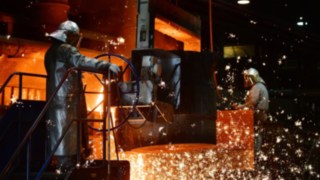
A rather special Linde Material Handling plant is also an integral part of the sustainability strategy of its parent company KION, which is guided by the criteria of the Science Based Targets initiative (SBTi). We are talking about Linde MH Plant 4 in Weilbach in the Odenwald region, better known locally as Eisenwerk Weilbach (Weilbach Ironworks). And this popular industrial metal is what it's all about, because Plant 4 produces nothing but iron counterweights for Plant 2, the nearby forklift truck factory in Aschaffenburg. One aspect in particular is carrying more and more weight: resource conservation.
More than just a block of iron
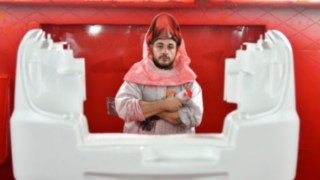
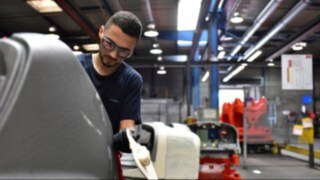
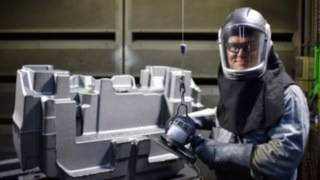
Counterweights are the "number one component" of every forklift truck – and in the manufacturing process, they are much more than just a block of iron. As an active vehicle component with complex connections and interfaces to the engine and chassis, they play a crucial role in the finished forklift. Up to 150 are produced daily in the long-established Weilbach foundry. This means that around 52,000 tons of iron annually are transformed into up to 39,000 counterweights in the distinctive Linde red. But what is cast here is far more than just heavy metal: It is the result of a production concept consistently geared toward resource conservation and efficiency, as well as a long-term development strategy.
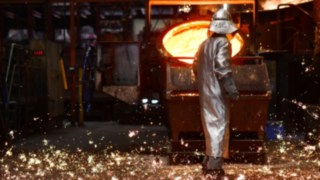
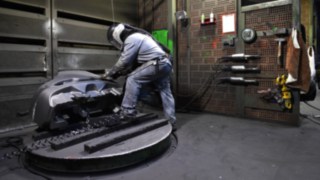
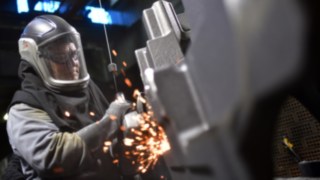
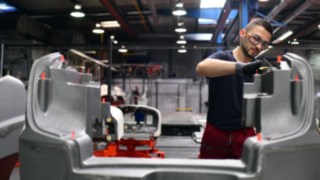
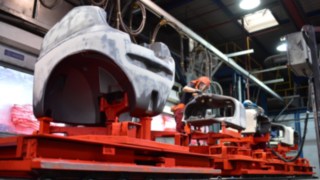
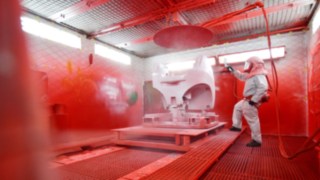
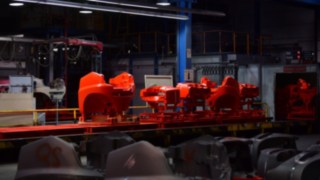
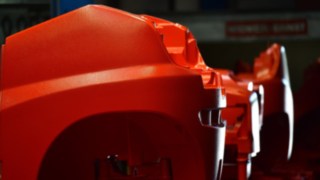
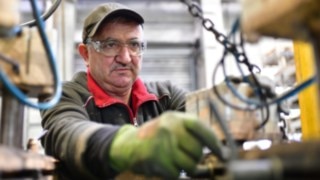
"We work exclusively with recycled cast iron scrap – every part has had a previous life, or even several," explains Frank Koch, Plant Manager at Weilbach. The materials used include old radiators, brake discs, manhole covers and, where possible, even returned counterweights. The silica sand required for the basic mould and the cavities of each casting is also chemically bonded on site, used for the mould, collected and then mechanically reprocessed. Material losses are minimal – the circular economy in its finest industrial form. In addition, the metal chips produced during the machining that the counterweights require after casting will in future be compacted directly on site and fed back into the melting process, so this material also stays in circulation.
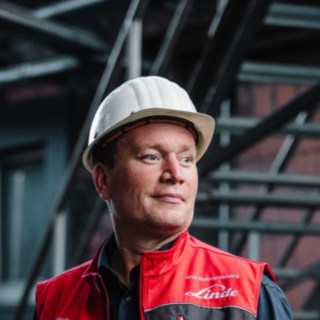
Our plant essentially functions like a recycling company.
Frank Koch, Plant Manager at the Weilbach foundry
Breaking new ground in melting
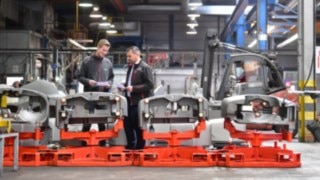
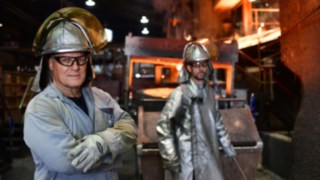
In Weilbach, special attention is naturally paid to the melting process, the heart of the foundry. Today, iron scrap is melted with coke from hard coal at temperatures of more than 1,500 degrees Celsius in a so-called cupola furnace – a process that requires a lot of fossil energy. Since 2022, the plant has therefore been testing the use of biocoke made from renewable raw materials such as straw, waste wood, and even nutshells. After numerous trials and a change of manufacturer, promising results are now emerging. The goal is to soon replace around 10 percent of the fossil fuel with biocoke.
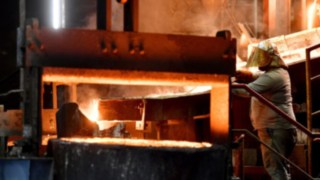
"We are one of the foundries in Germany that are playing a pioneering role in this area," emphasizes Koch. In the medium term, the move to electric melting technology using green energy is planned. This is part of the "2035 plus" strategy, developed by an internal company task force. The plan is to use special induction melting furnaces. This would then mark the transition to completely climate-neutral production.
Further modernisation with vision
The strategy also includes further investments. Between 2022 and 2025, as in the previous four years, approximately €12 million was invested in the plant in numerous measures that improve both environmental aspects and ergonomics and production safety. These include a new, low-energy counterweight machining center, energy-saving LED lighting in all halls, a sand core storage facility, a new core insertion line for improved ergonomics, and flood protection measures against the Mud River, which flows directly past the plant.
Even transports are emission-free
Sustainability in Weilbach will no longer end at the factory boundary. A shuttle service with two trucks operating in shifts has been set up to transport the counterweights to the nearby Aschaffenburg plant. In the near future, two electric counterparts will cover the approximately 35-kilometer route up to 14 times a day. Due to the tight schedule – Aschaffenburg only maintains half a working day's worth of inventory – the Weilbach plant serves, in a sense, as an extension and warehouse of the assembly lines. And this arm, alongside the plant itself, is now also becoming increasingly climate-friendly in terms of logistics.
Site profile: Weilbach ironworks
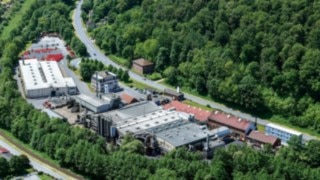
The Weilbach ironworks looks back on a long tradition spanning more than 200 years. Founded in 1822 as an iron hammer, it received a smelting concession four years later, which has remained in effect practically ever since. The plant has been part of Linde since 1975 and, continuously modernized, produces counterweights for Aschaffenburg. Currently, around 200 employees work here, producing up to 39,000 counterweights for Linde MH forklifts annually – exclusively from recycled scrap metal. Decades of proven foundry expertise, along with reliability, security of supply, unbeatable short delivery routes, and a consistently sustainable approach , secure the plant's place in the company's future.