Warehouse Management System (WMS)
Digital Control Center for the Warehouse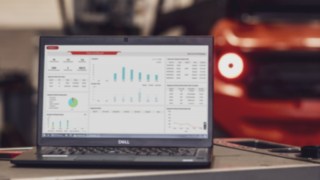
When working with fast-moving supply chains, warehouse efficiency is essential to business success. With customers expecting ever faster delivery times and greater transparency, seamless logistics processes are non-negotiable. Integrated software solutions for warehouse management, known as warehouse management systems (WMS), are key to achieving this.
WMS such as the Linde Warehouse Manager record and control all flows of goods and provide data and metrics for analyzing and optimizing all material handling processes. Warehouse management systems underpin strategic business decisions and are a prerequisite for comprehensive warehouse automation.
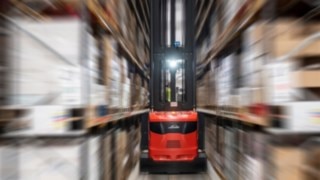
The Linde Warehouse Manager (LWM) is a modular and versatile warehouse management system that supports both manual and automated workflows from incoming to outgoing goods. With numerous interfaces available, the LWM can also be seamlessly integrated into existing IT infrastructures.
Thanks to the modular design of our WMS, the right functionality is always available to meet your current requirements. The system can be easily adapted and expanded as your needs evolve. Pre-configured standard modules and installer packages make commissioning particularly efficient. This ensures that the system is precisely tailored to the specific warehouse workflows and processes at hand.
For example, it is possible to start with simple manual warehouse processes and then gradually upgrade to semi or fully automated solutions. Prior to implementation, Linde MH experts work with you to define a personal solution for your specific requirements.
Modular Functions: From WMS to Forklift Guidance System
The Linde Warehouse Manager combines four powerful main functions into a holistic solution for warehouse logistics. Each of these functions performs specific tasks—from basic inventory management to real-time control of manual industrial trucks via the integrated forklift guidance system (FGS) and transferring warehouse orders to the control software of automated systems. Together, they enable end-to-end digitalization and optimization of all warehouse processes.
202507_16x9w320.jpg)
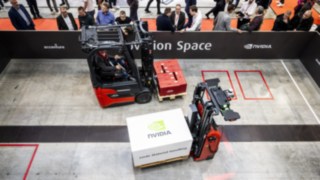
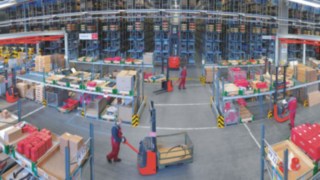
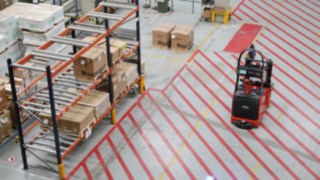
The LWM is suitable for automated (left) and manual (right) warehouse processes.
The LWM is suitable for automated (left) and manual (right) warehouse processes.
-
Warehouse Management System (WMS)
-
Warehouse Execution System (WES)
-
Warehouse Control System (WCS)
-
Forklift Guidance System (FGS)
Warehouse Management System (WMS)
The Linde Warehouse Manager WMS ensures efficient warehouse management by controlling all warehouse processes and tracking all inventory and goods movements in near real time. It supports material orders and optimizes warehouse utilization by flexibly adapting to different storage strategies such as FIFO, LIFO, or best-before date. Inventory counts can be carried out at any time. In this way, the system ensures optimum organization and control of all warehouse processes.
Warehouse Execution System (WES)
The Warehouse Execution System (WES) handles the operational control of all warehouse processes, from goods receipt, storage, picking, and production supply to replenishment, inventory transfer, and goods out. Through continuous data analysis, it increases process efficiency and optimizes the management of both traditional warehouse areas and automated systems. Transports are prioritized according to user-defined rules, and inbound and outbound orders, for example, are intelligently grouped to significantly increase warehouse throughput.
Warehouse Control System (WCS)
The Warehouse Control System (WCS) has the task of controlling the automated transport and storage systems. The WCS coordinates the processes via the control software of the systems used, such as conveyor technology, AGVs, or shuttles. It can also be integrated into the WMS and WES to synchronize various warehouse processes, thus ensuring maximum efficiency in the material flow.
Forklift Guidance System (FGS)
The Forklift Guidance System (FGS) plans, prioritizes, and controls all manual transport tasks in the warehouse. The drivers receive orders only relevant for them directly on the forklift terminal and can process them efficiently in the calculated sequence. This smart control system reduces idle times and increases performance. The integration of barcode scanners also reduces errors and speeds up processes.
Intuitive User Interface
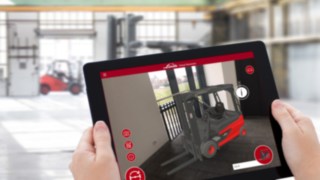
The user interface is intuitive and web-based. Employees can operate the warehouse management system via smartphones, forklift terminals, or standard web browsers. The warehouse management system (WMS) always provides a clear overview of all warehouse processes, transports, inventory, and reports. The software is available in up to 24 languages, making it ideal for international use in global companies.
_16x9w320.jpg)
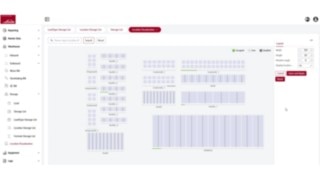
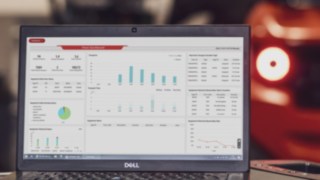
Numbers That Count: KPIs for All Logistics Processes
The KPI dashboard of the Linde Warehouse Manager provides decision-makers with key figures on warehouse performance. The warehouse management system provides various reports as standard, including transport lists, order lists, and material inventory overviews. By combining data from WES, WCS, and WMS, the Linde Warehouse Manager provides comprehensive analysis and monitoring of all warehouse processes. The system can also integrate automated trucks into the warehouse management system.
Advantages of a Warehouse Management System (WMS)
Future-Ready: Fast Track to Automation
Automation is the key to future-proof, efficient warehouse logistics. The Linde MH WMS enables a wide variety of systems and devices, such as automatic storage and retrieval systems (ASRS), automated guided vehicles (AGVs), autonomous mobile robots (AMRs), and shuttle systems to be easily and securely integrated into existing processes via interfaces to their control software. All processes are controlled centrally via the core modules WMS, WES, and WCS.
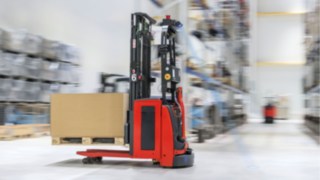
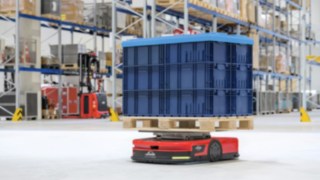
The seamless integration of the control software of automated system components and the Linde Warehouse Manager forklift guidance system ensures optimally coordinated manual and automated processes. Thanks to the central control system, warehouse managers always have a full overview of the automated processes. Downtimes or faults are detected immediately and can be rectified quickly. This ensures smooth operation at all times.
Linde Warehouse Manager Control Center:
- Integration of various automation solutions
- Central control via WMS, WES, and WCS
- Intelligent route optimization for manual trucks
- Full process transparency for warehouse managers
- Fast detection and rectification of faults
Seamless Integration: Connecting Systems and Equipment to the WMS
The warehouse management system from Linde Material Handling can be seamlessly integrated into the existing IT infrastructure. It offers a range of interfaces to conventional ERP systems and production planning systems as well as existing WMS and automation solutions from third-party providers.
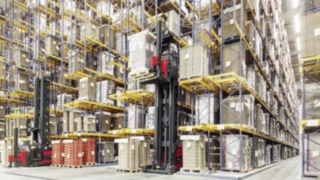
It is also possible to connect a wide variety of equipment: from automated trucks (AGVs/AMRs) to VNA trucks and stacker cranes through to conveyor systems, shuttles, PLC systems, sensors, gates, and barcode scanners. IT devices such as PDAs and terminals can also be connected. This comprehensive compatibility increases the long-term efficiency of the entire warehouse logistics system.
The Right Service: From Basic to 24/7
Linde MH offers comprehensive support for the Linde Warehouse Manager. The basic service is available from 8:00 a.m. to 4:00 p.m. (CET) and guarantees a response within 4 hours. There is also the option of extending the service hours to 24/7, 365 days a year. Regular software updates ensure the WMS continues to evolve.
- Standard response times of 4 hours
- Optional 24/7 service, 365 days a year
- Regular software updates

FAQ—Frequently Asked Questions about the LWM
What Is a Warehouse Management System (WMS)?
A warehouse management system (WMS) is an intelligent software solution for controlling and optimizing all warehouse processes. It manages and optimizes a wide range of warehouse processes, including inventory management, order processing, shipping, and goods receipt. Inventory levels, goods locations, and movements are tracked in real time. With a modern, modular WMS, such as the Linde Warehouse Manager, both manual and automated workflows can be controlled efficiently.
What Does a Warehouse Management System (WMS) Do?
A WMS controls and monitors all processes in the warehouse from incoming to outgoing goods. It tracks inventory and goods movements in real time, optimizes warehouse utilization, and streamlines material ordering. It also adapts flexibly to different storage strategies such as FIFO, LIFO, or best-before date. The system enables inventory counts to be performed at any time, ensuring optimal organization and control of all warehouse processes.
What are the Advantages of a Warehouse Management System (WMS)?
A WMS like Linde Warehouse Manager offers numerous advantages. As well as optimizing warehouse processes and boosting efficiency and productivity, it reduces error rates and ensures transparent inventory tracking. Fast implementation and flexible expansion are possible thanks to its modular design and standardized interfaces. It supports automation in the warehouse and integrates new technologies. It also provides key performance metrics, ensuring a sound basis for decision-making.
What Processes Can Be Automated with a Warehouse Management System (WMS)?
A WMS like the Linde Warehouse Manager can be used to automate numerous warehouse processes: from goods receipt, storage and order picking to production supply and replenishment through to inventory transfer and goods issue. It enables automated transport systems like automated guided vehicles (AGVs), autonomous mobile robots (AMRs), and shuttle systems to be integrated and controlled. Route planning for automated trucks and the prioritization of transport tasks can also be automated.
How Much Does a Warehouse Management System (WMS) Cost?
The costs for a warehouse management system such as the Linde Warehouse Manager are calculated on an individual basis, with Linde MH experts developing a custom solution during the initial consultation phase. The modular design allows you to start with what you need—for example, simple manual storage processes—and expand incrementally to include semi or fully automated solutions. In addition to the software, the overall package also includes implementation, training, and support: a basic service from 8:00 a.m. to 4:00 p.m. with a 4-hour response time is included as standard and can be extended to 24/7 operation if required.